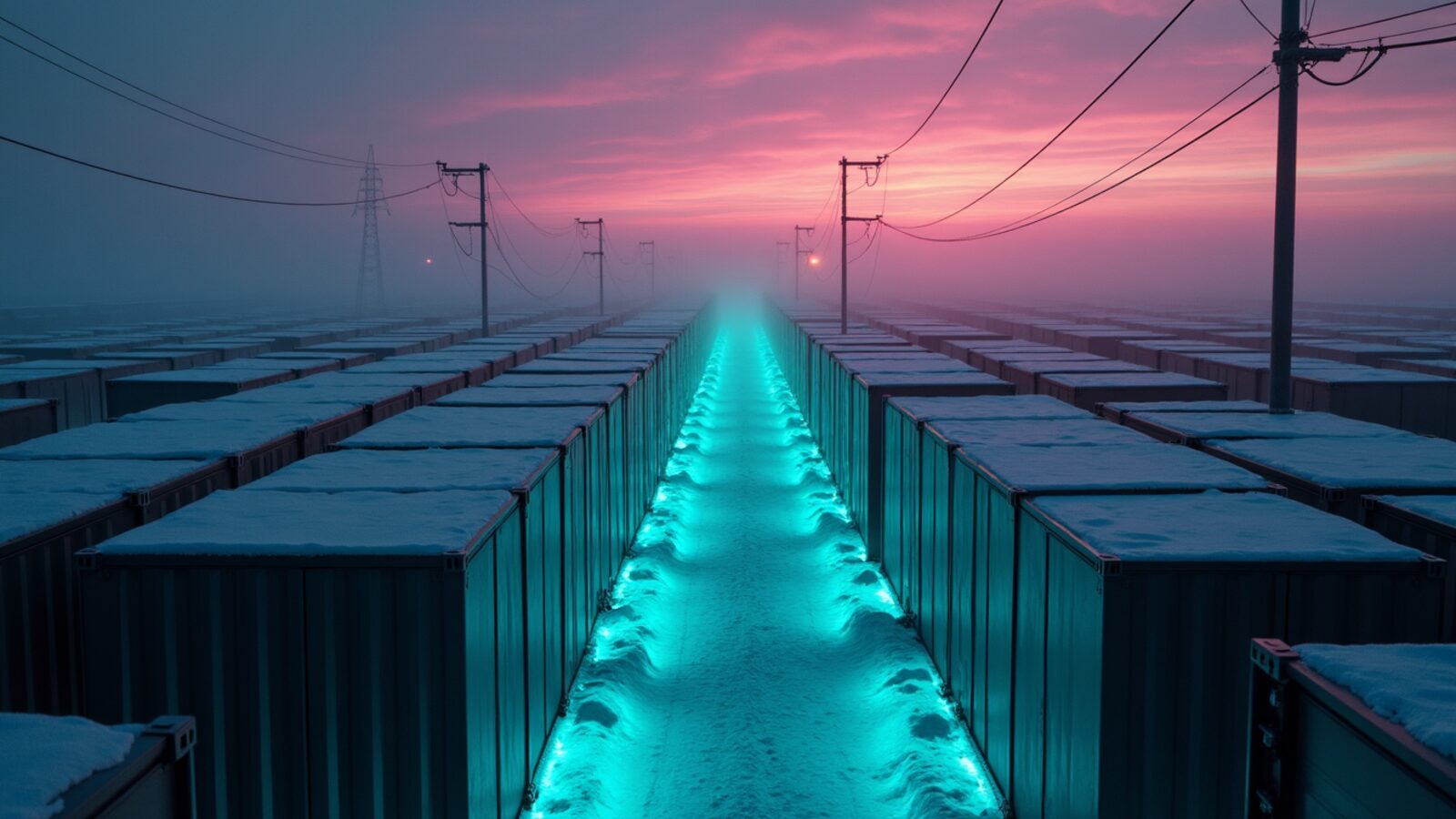
Bitcoin Hashrate Slides 9% as Winter Power Bills Squeeze Miners in Texas and Norway
Network hashrate has fallen for three straight weeks as grid curtailment and a cold snap push marginal operators offline. Analysts say the pullback is cyclical, but smaller miners are quietly selling coins to stay afloat.
Bitcoin’s network hashrate has dropped roughly 9% in three weeks, the steepest slide since the spring, as an early cold snap across the northern hemisphere raised power costs and forced some of the industry’s largest operators to switch off machines.
The seven-day average fell to about 842 exahashes per second on Tuesday, down from a peak near 925 EH/s in late October, according to data compiled by the analytics firm Dunmore Analytics. Block times have stretched to an average of 10 minutes and 41 seconds, and the next difficulty adjustment, due Saturday, is expected to drop by 5% to 6%.
Where the machines went dark
The damage is concentrated in two regions. In West Texas, grid operators issued three conservation notices in eight days, and miners enrolled in demand-response programmes were paid to power down. Halvorsen Hash, a Nasdaq-listed operator running about 38,000 machines near Abilene, told investors it curtailed for 61 hours in the first half of November, trading lost mining revenue for grid credits.
In Norway, the story is different but the outcome is similar. A dry autumn left reservoirs in the south of the country below seasonal norms, pushing wholesale electricity prices in the NO2 zone above 110 euros per megawatt-hour, nearly triple last year’s November average. Ironpine Compute, which runs a 120-megawatt site outside Kristiansand, said it has idled about a third of its fleet until prices fall.
“Nobody is capitulating in the dramatic sense,” said Marta Quillfeather, head of research at Dunmore Analytics. “This is arbitrage. If power costs more than the hashprice, you sell the electricity back to the grid and wait. The machines are fine. The margins are not.”
The squeeze on hashprice
Hashprice, the daily revenue a miner earns per terahash, has slipped to about $41 per petahash per day, near the lower end of its range this year. With the latest-generation rigs costing around 17 joules per terahash, a miner paying 8 cents per kilowatt-hour roughly breaks even. Those running older machines at 25 joules or worse are underwater at anything above 5 cents.
That gap is showing up in on-chain data. Wallets tagged to mid-sized mining pools sent about 4,300 BTC to exchanges over the past fortnight, the largest two-week outflow from miners since March. Quillfeather cautioned that the figure includes loan repayments and treasury rebalancing, not only distress sales.

“The machines are fine. The margins are not.”
Still, the pressure is real for the smaller end of the industry. Tomasz Brightwater, who runs a 6-megawatt operation in Alberta with two partners, said he has sold roughly half of his monthly production since October to cover power contracts. “We used to hold everything and treat it like a savings account,” he said. “Now I’m selling on a Monday to pay the bill on a Friday.”
What the adjustment will do
Bitcoin’s difficulty mechanism is designed for exactly this situation. When blocks arrive slowly, the protocol makes mining easier at the next adjustment, which restores margins for those still running. A 5% to 6% cut would lift hashprice by a similar amount, enough to coax some of the idled capacity back online if power prices ease.
Historically, sharp hashrate pullbacks have been poor predictors of price direction. The last comparable drop, in April, was followed by a recovery to new hashrate highs within seven weeks. But analysts watching the market say the composition of supply matters this time.
Three things to watch in the coming weeks:
- Weather and power prices. A warmer December in Texas and Scandinavia would send miners back to the grid quickly.
- Miner reserves. Public miners hold about 71,000 BTC combined; sustained selling from this group would be a more worrying signal than the hashrate dip itself.
- Fee revenue. Transaction fees contributed just 2.4% of block rewards in the past week, leaving little cushion if the price stalls.
The longer-term question is whether the industry’s pivot toward power-flexible operation is maturing or merely papering over thin margins. Halvorsen Hash’s chief financial officer, Delphine Oakhurst, argued it is the former. “Curtailment used to be a failure. Now it is a revenue line,” she told analysts on a call last week. “We earned more from switching off for those 61 hours than we would have from mining them.”
That is a persuasive argument for the best-capitalised operators with grid contracts and hedges. For the miners running older fleets on spot power, the next adjustment cannot come soon enough.

Nova covers mining, energy and market infrastructure, with a background in commodities reporting at a regional business daily. She is based in Austin, Texas.
Conversation (…)
One briefing. Every morning. Free.
Join readers who start the day with Crypto Beacon: the essential Crypto & web3 stories, curated by our editors.