IOSCO Warns Quantum Computing Threatens Blockchains and Financial Markets
In a 63-page report, the global securities regulators’ body says public blockchains face an especially hard migration to post-quantum cryptography, with Solana testing showing a roughly 90% throughput drop.
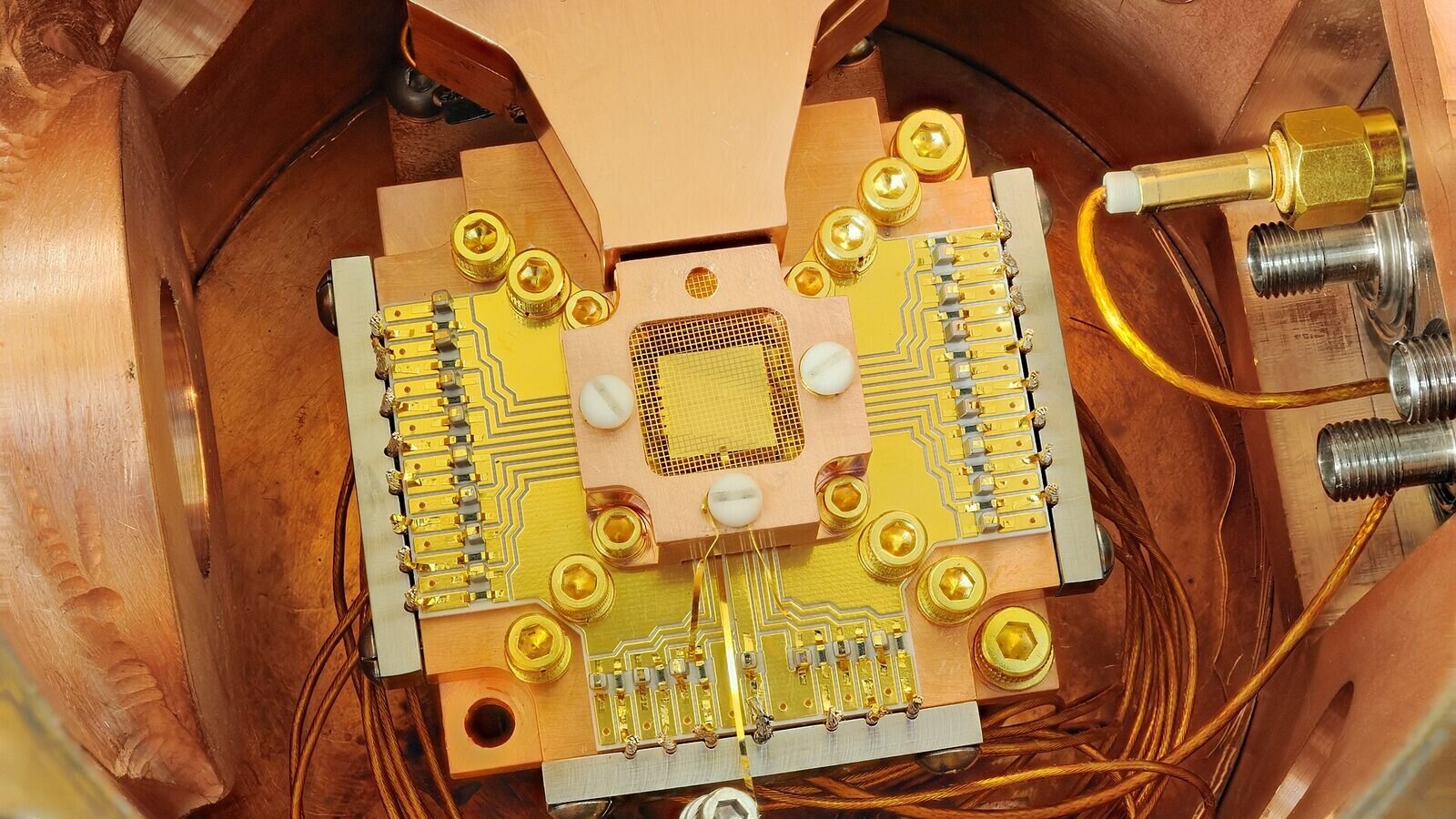
Photo: National Institute of Standards and Technology (Public domain) · Wikimedia Commons
The International Organization of Securities Commissions (IOSCO) has told financial firms to start preparing for quantum computing now, warning that blockchains may find the shift to quantum-resistant cryptography especially difficult.
In a 63-page report published Thursday, the global body for securities regulators called quantum computing a “significant medium to long-term cybersecurity challenge” for financial markets. IOSCO said no practical quantum computer capable of compromising widely used cryptography exists today.
“The scale and duration of the transition mean the financial sector should start preparing today,” said Jean-Paul Servais, chair of the IOSCO board. The report draws on a survey of IOSCO members and interviews with industry experts and market participants.
Early-stage readiness
IOSCO found that preparedness across the financial sector is still at an early stage. Most firms are raising awareness, setting up governance and taking inventory of the cryptography they use. Migration testing and rollout remain limited.
Firms pointed to reliance on third parties, interoperability, limited expertise and unclear timelines as common obstacles.
The problem is sharper for public blockchains, the report said, because cryptography is built into their core design. Replacing it requires hard forks and coordinated action across thousands of independent validators and node operators. Decentralized networks cannot force a fast upgrade, so any migration could be “slow and fragmented.”
The cost of new cryptography
The report also flagged the performance cost. Signatures from ML-DSA-44, a post-quantum standard from the U.S. National Institute of Standards and Technology, run about 2,420 bytes. That is roughly 35 to 40 times larger than the 64-byte signatures common today, which could strain throughput, storage and fees. IOSCO cited testing on Solana’s quantum-resistant testnet that showed throughput falling by about 90%.
Exposed coins are another concern. A capable attacker could derive private keys from public keys already visible on a network, and uneven migration could leave those assets vulnerable. The report singled out dormant or abandoned assets tied to exposed keys, which may be hard to move if holders cannot be identified or cannot act.
IOSCO did not mention bitcoin by name. Its blockchain examples were Ethereum, Solana and Tron.
Timing and next steps
Timing remains uncertain. IOSCO said conservative estimates put computers capable of breaking today’s cryptography in the 2030-2035 window. Several industry participants argued firms should plan for such machines arriving within five years, possibly sped up by artificial intelligence. The report also warned of “harvest now, decrypt later” attacks, in which data collected today is unlocked later.
The report stops short of setting rules. It urges firms to begin migrating to post-quantum cryptography and to build “crypto-agility,” meaning the ability to swap out cryptography without a major redesign. It tells securities regulators to watch for “quantum washing,” where companies overstate what their quantum products can do. IOSCO said it will keep quantum a priority in 2027.
Bitcoin’s exposure
According to Bitcoin Magazine, bitcoin’s exposure is well documented. Jameson Lopp estimated in May that about 6.93 million BTC, or 34.6% of supply, sat in outputs with exposed public keys. These include early pay-to-public-key coins and reused addresses.
Developers have drafted proposals, but none is active. BIP 360 would add a Taproot-like output type with no exposed public key, and BTQ Technologies has deployed it on a separate test network. Lopp co-authored BIP 361, a draft that would phase out legacy signatures, though he has said the next steps for now do not include it. BIP 360 does not protect coins whose keys are already exposed.
Lopp has argued that urgency matters: “Waiting until a quantum attacker is visible will leave us with the worst set of possible choices.”
Source: Bitcoin Magazine
Newsdesk turns crypto and web3 noise into clear signal. We write each story from another outlet's reporting, naming the original and linking to it so you can verify the work yourself.
Conversation (…)
One briefing. Every morning. Free.
Start the day with Crypto Beacon: the essential crypto & web3 stories in one email.